
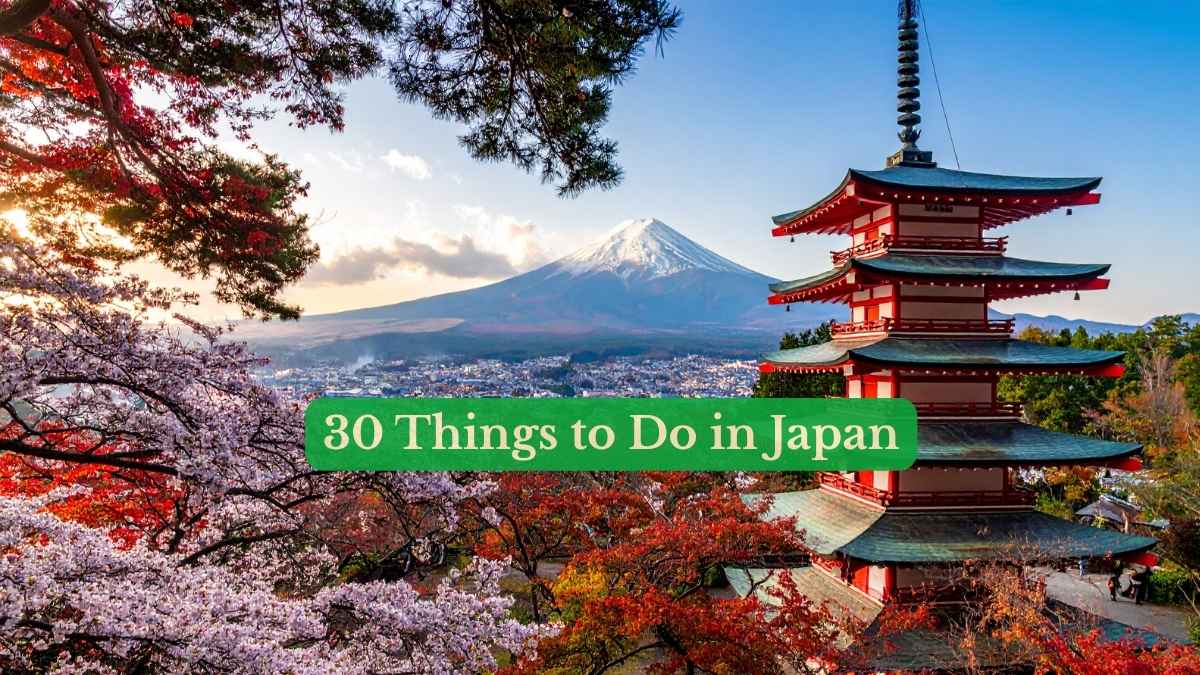
Planning your list of things to do in Japan opens the door to one of the world’s most fascinating destinations. This island nation blends ancient traditions with cutting-edge technology, peaceful temples with neon-lit cities, and sacred mountains with bullet trains racing at 200 miles per hour.
From the cherry blossom season that transforms parks into pink wonderlands to snow monkeys bathing in hot springs, Japan delivers experiences found nowhere else on Earth. More than 30 million visitors travel to Japan each year to explore cities like Tokyo, Kyoto, and Osaka, hike sacred peaks, taste world-renowned cuisine, and immerse themselves in a culture that honors both the past and the future.
The best things to do in Japan include viewing cherry blossoms in Tokyo and Kyoto, climbing Mount Fuji, visiting ancient temples, experiencing Tokyo’s modern attractions, soaking in onsen hot springs, eating authentic sushi and ramen, and exploring historic districts.
Must Read: 24 Things to Do in Sedona, Arizona
Things to Do in Japan by Region
| Region | Key Attractions | Best For |
|---|---|---|
| Tokyo | Shibuya, Asakusa, Akihabara, Tokyo Skytree | Modern culture, technology, nightlife |
| Kyoto | Fushimi Inari, Kiyomizu-dera, Arashiyama | Temples, traditional culture, geisha districts |
| Osaka | Universal Studios Japan, Dotonbori, street food | Theme parks, food, entertainment |
| Mount Fuji | Climbing, Fuji Five Lakes, Chureito Pagoda | Nature, hiking, photography |
| Hokkaido | Sapporo, ski resorts, national parks | Winter sports, nature, seafood |
| Okinawa | Beaches, Shurijo Castle, aquarium | Tropical paradise, diving, relaxation |
Experience Cherry Blossom Season
Springtime in Japan is synonymous with cherry blossoms (sakura). Some of the best spots for hanami (flower viewing) include Ueno Park and Shinjuku Gyoen in Tokyo, Maruyama Park in Kyoto, and the Himeji Castle grounds. The blossoms typically peak in late March to early April.
In Japan, there’s a cultural tradition called “hanami” where families and friends gather under blooming cherry blossoms to enjoy packed lunches and drinks during spring. These lively gatherings under cherry blossoms are quintessential scenes of Japanese spring.
Top Cherry Blossom Viewing Spots
- Chureito Pagoda, Mount Fuji: Famous for its majestic view of Mt. Fuji and the five-story pagoda. There are about 650 cherry trees planted in the park. You have to climb up a stone staircase with 398 steps to reach the observation deck. Best time: Early April.
- Kawaguchiko Cherry Blossom Festival: The festival is held at the northern shore of Lake Kawaguchiko (one of the Five Lakes at the foot of the mountain). In the evening, the cherry blossoms are illuminated from sunset until 9:00 PM.
- Ueno Park, Tokyo: One of the oldest and most popular spots with over 1,000 cherry trees.
- Philosopher’s Path, Kyoto: A peaceful canal-side walk lined with hundreds of cherry trees.
- Himeji Castle: The white castle creates a stunning contrast with pink cherry blossoms.
Cherry blossoms bloom from south to north across Japan between late March and early May. Tokyo and Kyoto typically see peak bloom in late March to early April, while areas around Mount Fuji bloom about 10 days later in mid-April.
Climb Mount Fuji
Early July to mid September is the official climbing season when the trails and mountain facilities are open. During this period the mountain is usually free of snow, the weather is relatively mild, access by public transportation is easy, and the mountain huts are open.
Mount Fuji stands 3,776 meters tall and is Japan’s highest peak. Climbing to the summit takes about 6 hours, with a 4-hour descent. Four main trails lead to the top:
Yoshida Trail (most popular):
- Opens: July 1 to September 10
- Ascent: 5 to 7 hours
- Daily limit: 4,000 hikers (requires advance reservation)
Fujinomiya Trail (closest to summit):
- Opens: July 10 to September 10
- Ascent: 4 to 7 hours
- No daily limit
Subashiri Trail:
- Opens: July 10 to September 10
- Ascent: 5 to 7 hours
Gotemba Trail (longest):
- Opens: July 10 to September 10
- Ascent: 7 hours
Most climbers start from the 5th station (halfway up the mountain) where paved roads end. Many choose to climb overnight to reach the summit for sunrise. Mountain huts between the 7th and 8th stations provide rest and meals.
Climbing Mount Fuji outside of the official climbing season is strongly discouraged. The trails are not maintained, huts are closed, food unavailable, and the weather unpredictable. Especially from October to around mid June, climbing to the summit is highly perilous due to extreme wind and weather conditions, snow, ice, and a risk of avalanches.
Explore Tokyo’s Top Attractions
Tokyo, the bustling capital, offers a mix of traditional and modern attractions. Visit Shibuya for its famous crossing and vibrant nightlife, Asakusa for the historic Senso-ji Temple, and Akihabara for electronics and anime culture. Don’t miss the observation decks at Tokyo Skytree and Tokyo Tower for panoramic city views.
Must-See Tokyo Districts
- Shibuya: The iconic scramble crossing sees up to 3,000 people cross at once during peak times. Shibuya Sky observation deck opened in 2019 and offers 360-degree views from 229 meters high.
- Asakusa: Home to Senso-ji, Tokyo’s oldest Buddhist temple founded in 645 AD. The Nakamise shopping street leads to the temple with traditional snacks and souvenirs.
- Harajuku and Omotesando: Youth fashion capital with Takeshita Street’s quirky shops and Omotesando’s designer boutiques.
- Akihabara: Electronics and anime hub with multi-story shops selling games, manga, and tech products.
- Shinjuku: Features the Tokyo Metropolitan Government Building with free observation decks, plus the nightlife of Kabukicho and Golden Gai’s tiny bars.
New Tokyo Attractions
teamLab Borderless in Azabudai Hills is a spanking new attraction that boasts a world of artworks without boundaries, and a museum without a map. Artworks move out of rooms, communicate with other works, influence each other, and at times intermingle, without boundaries.
Warner Bros. Studio Tour Tokyo – The Making of Harry Potter is the largest indoor Harry Potter attraction in the world and features exclusive sets only available in this location.
Immersive Fort Tokyo touts itself to be the world’s first immersive theme park, with a slew of immersive experiences and an immersive theatre where guests play a key role in the stories and narratives that unfold within.
Discover Kyoto’s Historic Temples and Shrines
Kyoto, the cultural heart of Japan, is home to over 1,000 temples.
Top Kyoto Temples
- Kiyomizu-dera: Even in Kyoto, a city that is world famous for its temples and shrines, Kiyomizu-dera is known for being one of the most beautiful and historic sites. The ‘pure water temple’ is especially renowned for its famous and iconic wooden stage which offers breathtaking views over the cultural heart of Japan.
- Fushimi Inari Taisha: You can’t leave Kyoto without seeing the thousands of vermilion torii gates at Fushimi Inari Shrine. Entering the grounds, you’ll see the main hall, the Noh Stage where priests periodically perform religious ceremonies, and to the left, the stunning tunnel of torii gates.
- Kinkaku-ji (Golden Pavilion): The top two floors are completely covered in gold leaf, creating spectacular reflections in the surrounding pond.
- Arashiyama Bamboo Grove: Walk through towering bamboo stalks in one of Japan’s most photographed natural settings.
- Ginkaku-ji (Silver Pavilion): Despite its name, the temple was never covered in silver, but its gardens remain exceptional examples of Zen design.
Experience Japanese Cuisine
Sushi is synonymous with Japanese cuisine, and the experience varies from kaitenzushi (conveyor belt sushi) to high-end dining. For a fun and casual meal, visit a kaitenzushi restaurant where plates of sushi rotate on a conveyor belt. For an unforgettable dining experience, book a reservation at a fine dining sushi restaurant like Sushi Saito or Sukiyabashi Jiro in Tokyo, where master chefs prepare exquisite sushi in front of you.
Ramen, with its rich broth and chewy noodles, is a beloved comfort food in Japan. Each region has its own specialty, from the tonkotsu (pork bone) ramen of Fukuoka to the miso ramen of Hokkaido.
Essential Japanese Dishes to Try
| Dish | Description | Where to Try |
|---|---|---|
| Sushi | Fresh raw fish over vinegared rice | Tokyo, any major city |
| Ramen | Noodle soup with regional variations | Fukuoka, Hokkaido, Tokyo |
| Tempura | Lightly battered and fried seafood/vegetables | Kyoto, Tokyo |
| Okonomiyaki | Savory pancake with cabbage, meat, seafood | Osaka, Hiroshima |
| Takoyaki | Fried octopus balls | Osaka street stalls |
| Kaiseki | Multi-course traditional meal | Kyoto |
| Tonkatsu | Breaded deep-fried pork cutlet | Nationwide |
| Udon/Soba | Thick/thin noodles in broth | Nationwide |
Visit Theme Parks
Japan is home to some of the world’s most exciting theme parks. Tokyo Disney Resort, featuring Disneyland and DisneySea, offers magical experiences for all ages. Universal Studios Japan (USJ) in Osaka boasts thrilling rides and attractions, including The Wizarding World of Harry Potter.
Top Theme Parks
- Tokyo DisneySea: In 2024, Tokyo Disney Sea underwent a magical transformation with the arrival of Fantasy Springs. This port features 3 mini-ports inspired by Frozen, Tangled, and Peter Pan with their enchanted worlds.
- Universal Studios Japan, Osaka: Features Harry Potter areas, Super Nintendo World, and movie-themed attractions.
- Studio Ghibli Park: The world’s first Ghibli Park opened with areas inspired by Laputa: Castle in the Sky, Kiki’s Delivery Service, and Earwig and the Witch.
- Fuji-Q Highland: Near Mount Fuji, offers some of the world’s most extreme roller coasters.
Soak in Onsen Hot Springs
Hot spring bathing is one of the most relaxing things to do in Japan. The country sits on volcanic islands with thousands of natural hot springs.
Top Onsen Destinations:
- Hakone: Easy access from Tokyo, with views of Mount Fuji
- Kinosaki Onsen: Historic hot spring town with seven public bathhouses
- Beppu, Kyushu: Produces more hot spring water than any other resort in Japan
- Kusatsu Onsen: High-altitude springs with strong mineral content
- Noboribetsu, Hokkaido: Nine different types of hot springs
Onsen Etiquette:
- Wash thoroughly before entering the bath
- Do not wear swimsuits (onsen are gender-separated)
- Tie long hair up
- Do not bring towels into the water
- Tattoos are often prohibited at public onsen
See Snow Monkeys
The snow monkeys of Jigokudani in Nagano are a unique sight, as they soak in hot springs surrounded by snow. Today, the park is particularly popular during the snowy winter months, anytime from December to March in Nagano, but it can be enjoyed all year round. Soaking in the hot springs is a big part of the monkeys’ daily routine and it is believed to have major stress relieving properties.
Jigokudani Monkey Park sits in the mountains of Nagano Prefecture. A 30-minute walk from the parking area brings you to the park where wild Japanese macaques bathe in natural hot springs. The monkeys are habituated to visitors but remain wild. The park sees up to 500 visitors per day during peak winter season.
Take the Shinkansen Bullet Train
Japan’s rail system is renowned for its efficiency and scenic routes. Take the Shinkansen (bullet train) for a fast and comfortable journey between major cities.
The Shinkansen reaches speeds up to 320 km/h (200 mph) and connects all major cities. The Japan Rail Pass offers unlimited travel on most JR trains, including many Shinkansen lines, for 7, 14, or 21 consecutive days.
Popular routes:
- Tokyo to Kyoto: 2 hours 15 minutes
- Tokyo to Osaka: 2 hours 30 minutes
- Tokyo to Hiroshima: 4 hours
- Tokyo to Hokkaido: 4 hours
Experience Traditional Festivals
Japan’s festivals, or matsuri, are vibrant and colorful. In 2024, don’t miss the Gion Matsuri in Kyoto, Awa Odori in Tokushima, and Nebuta Matsuri in Aomori. These festivals offer a glimpse into Japan’s rich cultural traditions.
Major Festivals
Gion Matsuri, Kyoto (July): Events take place over the entire month of July, but the main attraction is on the 17th. On this day, you can watch a long procession of wooden floats called the Yamaboko Junko. The floats can measure up to 25 meters high and weigh 12 tons, yet teams of people pull them by hand.
Sapporo Snow Festival (February): Features massive ice sculptures and winter activities, creating a magical winter wonderland.
Nebuta Matsuri, Aomori (August): Enormous illuminated floats parade through the streets accompanied by traditional music and dancers.
Awa Odori, Tokushima (August): Japan’s largest dance festival with coordinated group performances throughout the city.
Explore Hokkaido
Hokkaido, Japan’s northernmost island, is known for its stunning natural beauty. Visit Sapporo for its annual Snow Festival, explore the national parks such as Daisetsuzan, and enjoy fresh seafood in Hakodate. The flower fields of Furano are a must-see in summer.
Hokkaido offers world-class skiing from December through March. Popular ski resorts include Niseko, known internationally for deep powder snow, and Furano and Rusutsu.
Summer brings lavender fields in Furano and Biei, blooming from mid-July to early August. The rolling hills create a patchwork of purple, yellow, and green.
Visit Okinawa
Okinawa offers a subtropical paradise with beautiful beaches and a unique cultural heritage. Visit Shurijo Castle, explore the Okinawa Churaumi Aquarium, and relax on the pristine beaches of Ishigaki and Miyako Islands.
Okinawa’s climate differs dramatically from mainland Japan. Summer temperatures stay warm year-round, making it ideal for beach activities. The islands feature coral reefs perfect for snorkeling and diving, with visibility often exceeding 30 meters.
The Okinawa Churaumi Aquarium houses one of the world’s largest aquarium tanks, home to whale sharks and manta rays.
Shop in Tokyo and Osaka
Tokyo’s shopping districts cater to every taste:
- Ginza: Luxury brands and department stores
- Harajuku: Youth fashion and quirky boutiques
- Nakano Broadway: Anime, manga, and collectibles
- Kappabashi Street: Kitchen supplies and restaurant equipment
Osaka’s Dotonbori and Shinsaibashi areas offer shopping, entertainment, and famous food like takoyaki and okonomiyaki.
Stay in a Ryokan
Traditional Japanese inns called ryokan provide one of the most authentic cultural experiences. Guests sleep on futon mattresses laid on tatami mat floors, wear yukata robes, and enjoy multi-course kaiseki dinners.
Most ryokan include:
- Private or shared onsen baths
- Traditional Japanese breakfast and dinner
- Tatami mat rooms with sliding doors
- Yukata robes for guests
Prices range from $100 to over $1,000 per person per night depending on the ryokan’s prestige and location.
FAQs – Frequently Asked Questions
When is the best time to visit Japan?
Spring (March to May) and fall (September to November) offer the best weather and scenery. Spring features cherry blossoms, comfortable temperatures, and golden week holidays. Fall brings autumn foliage, clear skies, and pleasant hiking conditions. Summer gets hot and humid with typhoon season. Winter suits skiing and onsen visits.
Do I need a Japan Rail Pass?
The JR Pass saves money if you plan multiple long-distance trips. A 7-day ordinary pass costs around 50,000 yen. One Tokyo-Kyoto-Tokyo round trip on the Shinkansen costs about 27,000 yen, so two round trips justify the pass. The pass covers most JR trains including many Shinkansen lines but excludes Nozomi and Mizuho trains.
Is Japan expensive to visit?
Japan costs vary widely. Budget travelers can manage on $50 to $80 per day using hostels, convenience store meals, and free attractions. Mid-range travelers spend $150 to $250 daily for hotels, restaurant meals, and paid attractions. Luxury travel costs $300+ daily. The JR Pass, convenience stores, and lunch specials help control costs.
How many days do I need in Japan?
Two weeks covers Tokyo, Kyoto, Osaka, and Mount Fuji with some flexibility. Ten days works for Tokyo, Kyoto, and one other destination. Three weeks adds Hiroshima, Hokkaido, or Okinawa. First-time visitors often spend 3 to 4 days in Tokyo, 3 to 4 days in Kyoto, and 2 days in Osaka.
Do I need to speak Japanese?
Major cities and tourist areas function fine with English. Tokyo, Kyoto, and Osaka have English signs, menus, and some English-speaking staff. Learning basic phrases helps, especially in rural areas. Translation apps prove valuable. The Japanese appreciate any effort to speak their language, even simple greetings.
What should I pack for Japan?
Pack comfortable walking shoes as you will walk extensively. Bring layers for temperature changes. Include modest clothing for temple visits. Cash is still widely used, so carry yen. A portable wifi device or SIM card helps navigation. Many accommodations provide slippers and pajamas. Outlets use Type A plugs (same as North America).
Final Words
The variety of things to do in Japan means every traveler builds a unique experience. History buffs explore ancient temples and castles. Food lovers eat their way through regional specialties. Nature enthusiasts hike mountains and soak in hot springs. Technology fans visit cutting-edge districts and robot restaurants.
The country delivers experiences that blend 2,000-year-old traditions with innovations that shape the future. Whether you spend one week or one month, Japan rewards curiosity, respect for local customs, and willingness to step outside your comfort zone into one of the world’s most distinctive cultures.







Leave a Comment