
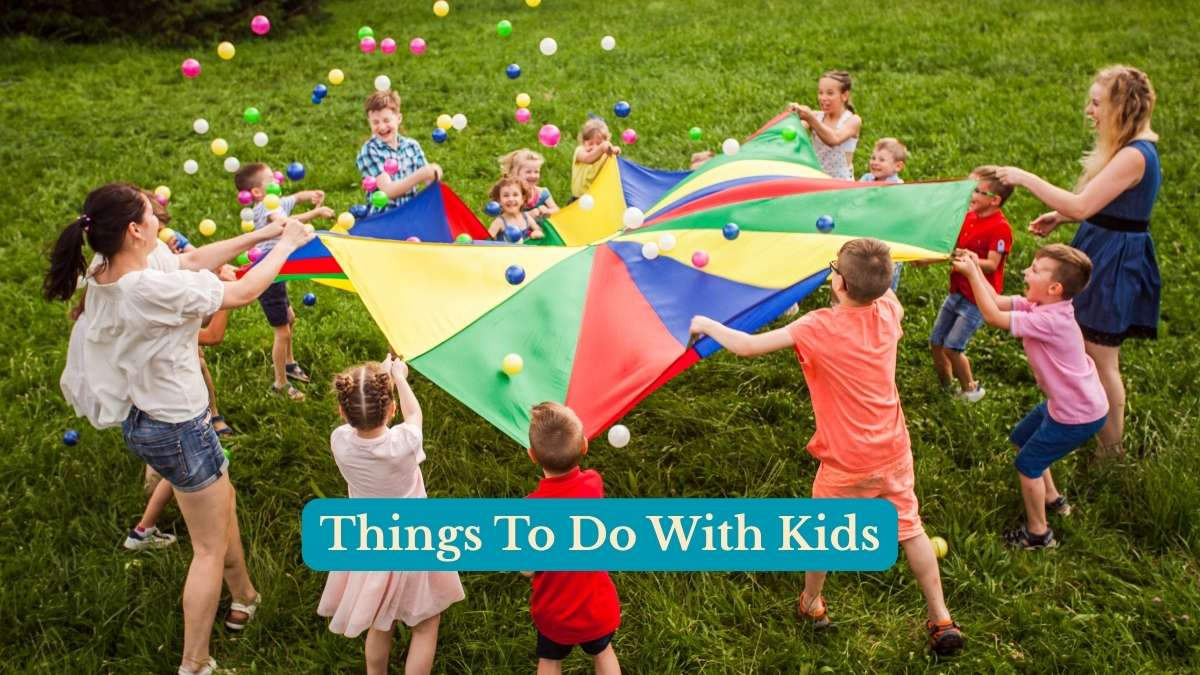
Finding things to do with kids that actually work, meaning activities children genuinely engage with rather than tolerate, is harder than it sounds. Children’s interests shift by age, energy level, and season. What absorbs a five-year-old for two hours bores a ten-year-old in twenty minutes. What works on a rainy Tuesday in November needs to be completely different from what works on a sunny Saturday in July.
This guide covers 50 specific activities across outdoor exploration, creative projects, food, learning, travel, and screen-free evenings at home. Each one is grounded in what children actually respond to rather than what looks impressive on paper. Most cost very little. All of them put the adults and children in the same experience rather than adults supervising from the side.
Must Read: Creative Things To Do With Paper At Home
The best things to do with kids include nature scavenger hunts, cooking simple recipes together, visiting hands-on science museums, building den structures indoors or outdoors, going on bike rides with a destination, doing art projects with real materials, playing in water, and visiting farms and zoos. Most of the best activities cost under $20.
Why the Activities You Choose Matter More Than the Time You Spend
A 2017 study from the American Psychological Association found that the quality of shared parent-child activity, specifically activities that involve joint attention, problem-solving, and physical engagement, produces stronger developmental benefits than the quantity of time spent in passive proximity. Watching television in the same room for three hours produces significantly weaker bonding and cognitive benefits than one hour of cooking, building, or outdoor exploration together. The things to do with kids that matter most are the ones that put everyone in the same task, not the same room.
Also Check: 25 Fun Things to Do in Portland Maine That Locals Actually Love
Kids Activities At a Glance
| Category | Example Activity | Best Age | Cost |
|---|---|---|---|
| Outdoors | Nature scavenger hunt, hiking | All ages | $0 |
| Creative | Art project, den building | Ages 3-12 | $0-$20 |
| Food | Cooking and baking together | Ages 4 and up | $10-$25 |
| Learning | Science experiments, museum visit | Ages 4 and up | $0-$25 |
| Active | Bike ride, swimming, sports | All ages | $0-$20 |
| Social | Board games, trivia | Ages 5 and up | $0-$30 |
| Cultural | Zoo, farm, aquarium | All ages | $10-$35 |
| Rainy day | Indoor crafts, baking, experiments | All ages | $0-$15 |
Things To Do With Kids: Outdoors and Nature
1. Run a Nature Scavenger Hunt
A nature scavenger hunt is one of the most effective things to do with kids outdoors because it gives children a specific purpose for the walk rather than just being moved from A to B. With a list and a goal, children who would drag their feet on a plain walk become genuinely engaged.
Scavenger hunt items by age group:
Ages 3-5 (visual recognition):
- Something yellow
- A round stone
- A feather
- A big leaf and a small leaf
- Something that makes a sound when touched
- Mud
Ages 6-9 (observation and identification):
- An insect of any kind
- Evidence of an animal you cannot see (track, burrow, or chewed nut)
- Three different types of bark
- A seed that travels by wind
- Something that smells
- A spider web
Ages 10-12 (identification and recording):
- Five different native plant species, named
- An invertebrate under a rock or log (replace the rock after)
- Evidence of a bird (nest, pellet, feather, or dropping)
- Two different types of fungi
- A plant that is not native to your area
The iNaturalist app (free) identifies plants, insects, and fungi from a phone photograph and logs to a citizen science database that real researchers use. Using it with children makes the hunt feel consequential rather than arbitrary.
2. Go on a Bike Ride With a Destination
A bike ride with a specific destination works significantly better than a ride with no end point. The destination does not need to be impressive. A specific cafe, a playground, a viewpoint, or a bridge all work. The destination gives the ride a narrative: we are going somewhere, we will arrive, and then we will come back.
Planning a good family bike ride:
- Pick a route with a clear, visible end point no more than two to three miles from the start for younger children
- Use a rail trail or cycling path rather than roads wherever possible
- Pack a snack to eat at the destination as a reward
- Bring a pump and basic puncture repair kit for rides longer than 30 minutes
- Let the child set the pace rather than pulling them to keep up
City bike-share schemes in most US cities cost $5-$8 per day pass per bike. Rails-to-Trails Conservancy at railstotrails.org lists 24,000 miles of paved trails across the US.
3. Build a Den Outdoors
Den building using sticks, branches, and natural materials is one of the oldest and most universally engaging things to do with kids in outdoor settings. Research from the University of Cambridge found that children who engaged in self-directed outdoor construction play demonstrated higher levels of creative problem-solving and risk assessment than children with structured outdoor activities.
Den building basics:
- Find a clearing with nearby fallen branches and available natural materials
- Start with a central support: two forked sticks planted in the ground supporting a horizontal ridge pole
- Lean branches against the ridge pole on both sides to form walls
- Fill gaps with leaves, bracken, and smaller sticks for insulation
- Test the structure by getting inside it
No tools needed. No budget required. Allow 60-90 minutes for a serious group build.
4. Go Rock Pooling or Beach Exploring
Rock pooling on a low tide is one of the most naturally absorbing things to do with kids near any coastline. Tide pools at low water contain crabs, starfish, sea anemones, blennies, and dozens of other species that are entirely inaccessible at high tide.
What to bring:
- A field guide to coastal rock pool species for your region ($10-$15 from any bookshop)
- A shallow white tray for temporarily holding specimens while examining them
- Sunscreen and shoes with non-slip soles
- A tide table for the specific beach you are visiting (available free at tide-forecast.com)
Low tide rules children benefit from learning:
- Always replace rocks and shells exactly as you found them
- Handle animals briefly and gently, then return them immediately
- Do not take any live animals from the rock pool
- Check tide times before arriving so you have at least two hours of low water
5. Go Camping as a Family
Family camping is one of the most immersive things to do with kids because it removes the usual distractions of home life and replaces them with shared logistics, natural environment, and 24-48 hours of sustained togetherness. Children who camp regularly show stronger outdoor confidence, better sleep patterns, and higher scores on nature connection measures in multiple studies.
First-time camping logistics:
| Task | When to Do It | Notes |
|---|---|---|
| Reserve campsite | 4-8 weeks ahead | Recreation.gov for national park campgrounds |
| Practice tent pitching | 1 week before | Pitch in the garden first so nobody learns in the dark |
| Plan meals | 1 week before | Foil-packet meals and one-pan dishes suit campfire cooking |
| Pack rain gear | Day before | Weather changes faster outdoors than forecasts suggest |
| Charge power banks | Night before | For torches, not for screens |
State park campsite costs: $25-$45 per night for tent sites. National park campgrounds: $20-$30 per night.
6. Visit a Working Farm
Farm visits give urban and suburban children direct experience of food production that no classroom can replicate. Pick-your-own farms, working dairy farms with public access, and farm parks with animal contact all provide different but complementary experiences.
Types of farm visits by season:
| Season | Best Farm Activity | Typical Cost |
|---|---|---|
| Spring | Lambing and spring animal activity | $5-$12/person |
| Summer | Strawberry and berry picking | $8-$15/person (pay per weight) |
| Autumn | Apple and pumpkin picking | $10-$20/person |
| Winter | Christmas tree cutting, winter animals | $15-$30/family |
Pick-your-own farm directories: PickYourOwn.org lists farms by US state. The National Farmers Union lists farm open days and pick-your-own sites in the UK.
7. Go Swimming in Outdoor Water
Swimming in a lake, river, lido, or sea is one of the most physically engaging things to do with kids and one that children almost universally enjoy. The American Academy of Pediatrics recommends swimming lessons starting from age one. Children who swim regularly have higher cardiovascular fitness, better body confidence, and stronger water safety awareness than those who only swim in pools.
Safe outdoor swimming locations for families:
- State park designated swimming beaches (lifeguarded, $5-$10 per vehicle)
- Municipal outdoor lidos and pools ($3-$6 per person)
- Supervised inland beaches at lakes and reservoirs
- YMCA outdoor summer pools ($5-$10 per visit for non-members)
Always swim at lifeguarded venues with young children. The US Lifesaving Association recommends children under 12 remain within arm’s reach of an adult in open water.
Things To Do With Kids: Creative and Making
8. Cook a Meal Together
Cooking with children is one of the most developmentally rich things to do with kids because it combines maths (measuring), reading (following a recipe), science (heat transformation), and fine motor skills in a single activity with a tangible, edible result. A 2018 study in Appetite journal found that children who helped cook a meal rated it more positively and ate more of it than the same meal they did not help prepare.
Good first cooking projects by age:
Ages 4-6:
- Spreading and assembling (sandwiches, pizza with pre-made dough)
- Mixing batter (pancakes, simple cakes)
- Washing and tearing (salad leaves)
Ages 7-10:
- Measuring and weighing ingredients
- Simple heat work with supervision (stirring, flipping pancakes)
- Making pasta sauce from scratch
Ages 11-14:
- Full recipes with supervision
- Planning a complete meal
- Learning knife skills with appropriate supervision
9. Run a Science Experiment at Home
Home science experiments are one of the most cost-effective and engaging things to do with kids on rainy days. The best experiments use materials already in the house and produce results visible within minutes.
Five experiments with reliable results:
- Baking soda and vinegar volcano – Build a mound of baking soda, add food colouring, pour white vinegar. Immediate carbon dioxide reaction. Ages 4 and up.
- Non-Newtonian cornstarch fluid – Mix cornstarch and water in a 2:1 ratio. The resulting fluid is solid under pressure and liquid at rest. Ages 5 and up.
- Chromatography with coffee filters – Draw a line with a washable marker near the bottom of a coffee filter, dip the bottom edge in water. Watch the ink separate into component colours. Ages 6 and up.
- Density column – Layer corn syrup, washing-up liquid, water with food colouring, and cooking oil in a glass. Each settles into a distinct layer. Ages 7 and up.
- Lung capacity balloon – Blow a balloon in a single breath, then measure the diameter with a ruler. Test before and after exercise and compare results. Ages 8 and up.
10. Do an Art Project With Real Materials
Art projects with quality materials produce significantly better results and higher engagement than activities with cheap craft supplies. Watercolour paints, proper drawing pencils, oil pastels, and good paper all cost under $20 for a starter set and last months.
Art projects that produce genuine results:
| Project | Materials | Age Range | Time |
|---|---|---|---|
| Watercolour resist | Watercolours, white wax crayon, water | Ages 5 and up | 30-45 min |
| Observational drawing | Drawing pencils, cartridge paper | Ages 6 and up | 30-60 min |
| Lino printing | Soft-cut lino, ink, brayer | Ages 8 and up | 60-90 min |
| Collage portraits | Magazines, scissors, glue, card | Ages 4 and up | 45-60 min |
| Nature printing | Leaves, paint, paper | Ages 3 and up | 20-30 min |
11. Build an Indoor Den
An indoor den built from sofa cushions, chairs, blankets, and sheets is one of the most universally beloved things to do with kids at any age from toddler through early adolescence. The enclosed space that a den creates produces a sense of ownership and privacy that children find genuinely satisfying.
Indoor den building kit:
- Large bed sheets and duvet covers (best for draping across furniture)
- Bulldog clips ($3-$5 for a pack) to attach sheets to furniture edges
- Fairy lights or a battery-powered torch for lighting
- Pillows and blankets brought inside the den
Once built, the den becomes the stage for reading, storytelling, games, and films rather than the activity itself. Build it together, then use it together.
12. Make Things From Cardboard
Large cardboard boxes are one of the most versatile free creative materials available. Appliance shops and supermarkets give away large boxes freely.
Cardboard projects by age and complexity:
- Simple box houses and castles – Draw and cut windows and doors, paint or colour the exterior. Ages 4-7.
- Cardboard puppet theatre – Cut a proscenium arch from a large box, paint, and add a curtain from fabric scraps. Ages 5-10.
- Cardboard marble run – Cut tubes and ramps from cardboard, tape together at angles to create a track for a marble. Ages 7-12.
- Wearable costume armour – Cut breastplates, bracers, and helmets from flat cardboard, paint silver or gold, attach with ribbon. Ages 6-12.
- Cardboard city – Multiple boxes assembled into a street of buildings, painted and detailed. Multi-session project for any age.
Things To Do With Kids: Learning and Culture
13. Visit a Hands-On Science Museum
Hands-on science and discovery museums are among the most reliably successful things to do with kids because they are built entirely around the principle that children learn through doing rather than observing. Every exhibit invites physical interaction.
Key hands-on science museums in the US:
| Museum | City | Admission | Notable Feature |
|---|---|---|---|
| Exploratorium | San Francisco, CA | $34.95/adult | The original hands-on science museum, founded 1969 |
| Chicago Children’s Museum | Chicago, IL | $17/person | Ages 0-12, Tinkering Lab |
| Liberty Science Center | Jersey City, NJ | $25/adult | Largest IMAX in Western Hemisphere |
| Oregon Museum of Science | Portland, OR | $22/adult | Planetarium and hands-on science galleries |
| Denver Museum of Nature and Science | Denver, CO | $18/adult | Dinosaur fossils and planetarium |
Most science museums have dedicated toddler zones for children under 5 and more complex exhibit areas for 6-12. Plan 2-3 hours minimum.
14. Visit a Zoo or Aquarium
Zoos and aquariums accredited by the Association of Zoos and Aquariums (AZA) operate under strict animal welfare standards and contribute directly to conservation funding. AZA member institutions collectively fund over $230 million in conservation projects annually.
Making a zoo or aquarium visit more educational:
- Pick two or three animals to focus on deeply rather than rushing past everything
- Arrive at feeding times, usually posted on the zoo’s website or at the entrance
- Read the exhibit information together rather than moving straight to the next enclosure
- Ask children to pick their favourite animal at the end and explain their choice
Most zoos offer free or reduced admission for children under 3. Annual family memberships typically pay for themselves within two visits.
15. Use the Public Library System
Public libraries are the single most underused free resource available for things to do with kids in most communities. Beyond book borrowing, most library systems now offer:
- Digital audiobook and ebook borrowing through the Libby app (free with library card)
- STEM toy and game lending in many US library systems
- Free children’s programming including story time, craft sessions, and coding clubs
- Summer reading programmes with tracked progress and small rewards
- Free access to learning platforms including Mango Languages and LinkedIn Learning
A library card is free. Everything accessed through it is free. For families on any budget, the public library is the highest-value resource for children’s learning and entertainment available.
16. Grow Something From Seed Together
Growing a plant from seed to harvest is a multi-week project that teaches biology, responsibility, patience, and the satisfaction of producing food. A 2019 study from the RHS (Royal Horticultural Society) in the UK found that children who grew their own food ate more vegetables and showed higher environmental awareness than a control group.
Easy first plants for children:
| Plant | Time to Harvest | Difficulty | Space Needed |
|---|---|---|---|
| Sunflowers | 70-100 days to flower | Very easy | Outdoor, tall space |
| Cherry tomatoes | 60-80 days | Easy | Pot or garden |
| Radishes | 25-30 days | Very easy | Small pot or bed |
| Runner beans | 60-70 days | Easy | Outdoor support |
| Cress | 5-7 days | Instant | Kitchen windowsill |
Cress grown on a damp paper towel in a container produces visible results within five days and is suitable for children as young as three.
Things To Do With Kids: Active and Physical
17. Play Classic Outdoor Games
Classic outdoor games require no equipment, cost nothing, and produce high physical activity levels in children who would otherwise sit with a screen. Research from the American Heart Association recommends children get 60 minutes of moderate to vigorous physical activity daily. Classic games contribute directly to this in a way that is enjoyable rather than imposed.
Classic games that still work:
- Capture the Flag – Two teams, two flags, convert opponents by tagging in their territory. Ages 7 and up, 6-20 players.
- British Bulldog – One person tries to tag runners crossing a space. Tagged players join the middle. Ages 6 and up.
- Kick the Can – A combination of tag and hide-and-seek using a tin can as the goal. Ages 7 and up.
- Four Square – Bounce a ball between four squares drawn on pavement, eliminate players who miss. Ages 6 and up.
- Red Light Green Light – Running game with freeze element, no equipment needed. Ages 4 and up.
18. Go on a Fossil Hunt
Fossil hunting is one of the most exciting things to do with kids who have any interest in science or natural history. Several publicly accessible beaches in the UK and US produce fossil finds regularly, requiring no special equipment beyond careful looking.
Good fossil hunting locations:
- Lyme Regis, Dorset, UK – The original Jurassic Coast site. Ammonites and belemnites found regularly on the beach.
- Calvert Cliffs State Park, Maryland – Miocene-era shark teeth wash out of the cliffs onto the beach regularly. Free entry.
- Florissant Fossil Beds, Colorado – Insect and plant fossils in shale. Access requires National Park entry ($10/person).
- Joggins Fossil Cliffs, Nova Scotia – UNESCO World Heritage site with Carboniferous-era fossils.
Rules for fossil hunting: Only collect loose material on the beach. Do not hammer or chip cliff faces, which is illegal at most sites.
Things To Do With Kids: At Home Rainy Days
19. Build and Play a Board Game Together
Board game play produces direct cognitive benefits in children including turn-taking, rule-following, strategic thinking, and numeracy. A 2018 study in PLOS One found that board games improved numeracy and counting skills in preschool children significantly more than worksheets covering the same content.
Board games genuinely suited to mixed adult-child groups:
| Game | Age Range | Players | Time |
|---|---|---|---|
| Ticket to Ride: First Journey | Ages 6 and up | 2-4 | 30 min |
| Pandemic | Ages 8 and up | 2-4 | 45 min |
| Sleeping Queens | Ages 5 and up | 2-5 | 20 min |
| Codenames Pictures | Ages 7 and up | 2-8 | 20 min |
| Uno | Ages 4 and up | 2-10 | 20-30 min |
| Catan Junior | Ages 6 and up | 2-4 | 30-40 min |
20. Host a Family Cooking Show Competition
A home cooking competition structured like a children’s television cooking show is one of the most creative rainy-day things to do with kids aged 7 and up. Each person or pair gets the same five ingredients and 20 minutes to make something. An adult or older sibling judges on taste, creativity, and presentation.
Rules that make it work:
- Set the five ingredients in advance and reveal them at the start
- Use a visible timer on a phone or clock
- Score on three criteria: taste (5 points), creativity (5 points), presentation (5 points)
- The judge explains their scores for each entry before the winner is announced
Things To Do With Kids: By Age Group
| Age | Best Activities |
|---|---|
| Ages 1-3 | Water play, sensory bins, simple cooking (stirring, washing), animal farms, building blocks |
| Ages 4-6 | Den building, nature scavenger hunts, simple art projects, farm visits, swimming, board games |
| Ages 7-10 | Hiking, cooking full recipes, science experiments, bike rides, museum visits, rock pooling |
| Ages 11-14 | Fossil hunting, photography projects, camping, cooking challenges, kayaking, complex board games |
Things To Do With Kids: By Budget
| Budget | Best Options |
|---|---|
| Free | Library visits, outdoor games, den building, nature scavenger hunts, rock pooling, public parks |
| Under $20 | Art project materials, home science experiments, board game, farm pick-your-own, bike hire |
| $20-$50 | Zoo or aquarium visit, science museum, swimming day, family camping per night |
| $50+ | Ski day, kayaking session, multi-day camping, major city museum complex |
FAQs: Things To Do With Kids
What are the best free things to do with kids?
Public library visits, outdoor scavenger hunts, den building with sticks or cushions, classic outdoor games, home science experiments using kitchen materials, and visits to free national and state museums all cost nothing. Most of the best things to do with kids rely on engagement and novelty rather than spending money.
What are good things to do with kids on a rainy day?
Home science experiments, indoor den building, cooking or baking together, art projects with proper materials, board games, cardboard construction projects, and library visits all work well in wet weather. The key is preparing materials in advance rather than deciding what to do after the rain starts.
What are the best things to do with kids under 5?
Water play in a tub or paddling pool, sensory bins with rice or sand, simple baking with stirring and pouring, animal farms, simple den building, nature walks with a collecting bag, and free play in a park all suit children under 5. Activities with immediate sensory feedback work best at this age.
How do you keep kids engaged during activities?
Match the activity to the child’s current developmental stage rather than their age on paper. Give children a specific role or task within each activity rather than asking them to watch. Keep activities to 45-60 minutes maximum for under-8s. End before engagement drops rather than after. Children disengage from boredom, not fatigue.
What are educational things to do with kids that do not feel like school?
Cooking, growing plants from seed, fossil hunting, visiting hands-on science museums, rock pooling with a field guide, and building with cardboard all produce genuine learning through direct experience. Research consistently shows that experiential learning produces better retention and more positive associations with the subject than instruction-based approaches.
What are good things to do with kids in winter?
Ice skating at public rinks, baking projects, indoor den building, home science experiments, board games, visits to natural history and science museums, aquarium visits, and snowshoeing or building snow structures where snow is available all work well in winter. Things to do with kids in winter specifically benefit from activities that make the season feel special rather than inconvenient.
Conclusion
The things to do with kids that children actually remember are almost never the expensive or elaborate ones. They are the afternoon you built a den in the woods and ate sandwiches inside it, the morning you found a crab in a rock pool, the rainy day you made a volcano and it went everywhere, and the bike ride where everyone got lost and found a better way home.
Pick activities from this list that put you in the same task rather than the same room, give children a genuine role rather than an audience seat, and keep the agenda loose enough for the unexpected to happen. Those are the things to do with kids that compound into actual childhood memories.







Leave a Comment