
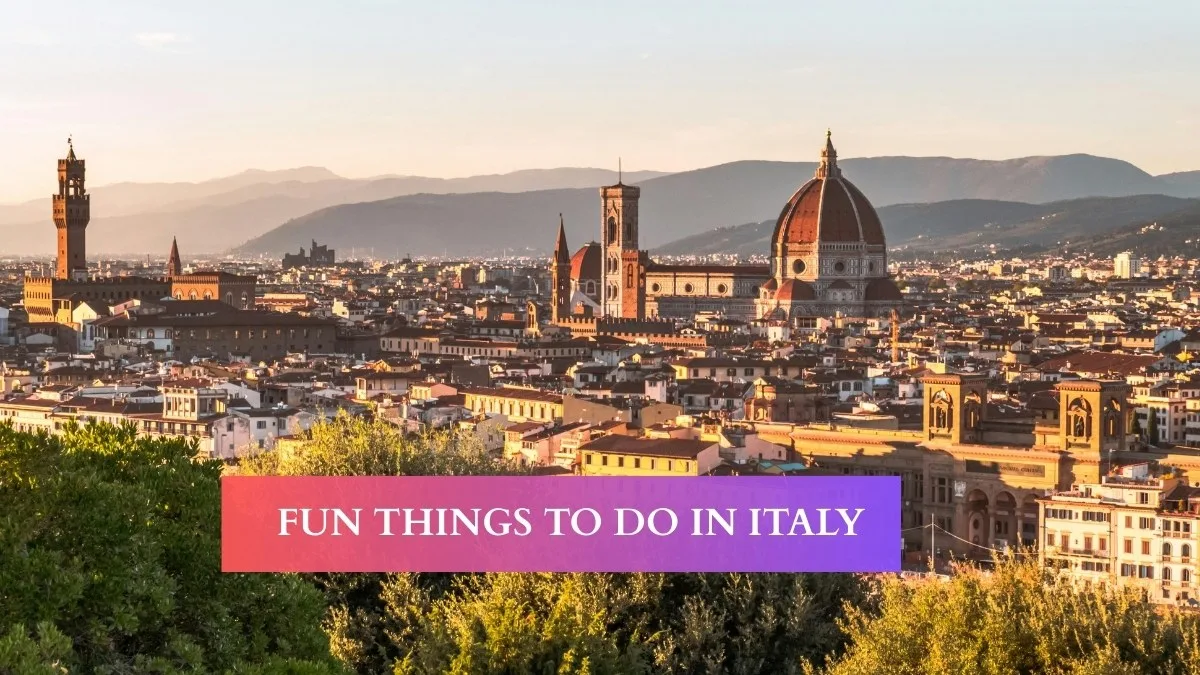
Italy is one of the world’s most exciting destinations, filled with history, culture, food, and unforgettable experiences. If you’re planning a trip and searching for fun things to do in Italy in 2026, you’ll find far more than the usual tourist attractions. From exploring ancient ruins and charming villages to enjoying authentic Italian cuisine and vibrant local festivals, the country offers countless ways to create lasting memories.
Many travel guides focus only on famous landmarks, but locals and repeat visitors often recommend unique experiences that truly capture the spirit of Italy. In this guide to fun things to do in Italy in 2026, you’ll discover popular attractions, hidden gems, cultural activities, and memorable adventures that travelers return for again and again.
Why Italy Delivers on Every Trip
🇮🇹 Italy has 58 UNESCO World Heritage Sites, more than any other country on earth. It also has 20 distinct regions, each with its own dialect, cuisine, and character. The fun things to do in Italy are not limited to Rome and Venice. Southern Italy, the Dolomites, Lake Como, and Puglia each offer experiences that rival the famous northern cities. This guide covers the country honestly, city by city and region by region, so you can build a trip that fits what you actually enjoy.
Also Read: Kid Friendly Activities Rhode Island This Weekend
Italy at a Glance: Top Experiences
The best fun things to do in Italy include touring the Colosseum in Rome, riding gondolas in Venice, exploring the Uffizi Gallery in Florence, hiking the Cinque Terre coastal trails, eating your way through Bologna, island-hopping in Sicily, and taking a cooking class in Tuscany.
| Experience | Location | Approx. Cost | Time Needed |
|---|---|---|---|
| Colosseum and Roman Forum | Rome | 18 euros/person | 3-4 hours |
| Uffizi Gallery | Florence | 25 euros/person | 2-4 hours |
| Vatican Museums and Sistine Chapel | Rome | 20 euros/person | 3-4 hours |
| Cinque Terre hiking trail | Liguria | 7.50 euros trail pass | Full day |
| Gondola ride | Venice | 90 euros per gondola | 30-40 minutes |
| Cooking class | Tuscany/Bologna | 75-150 euros/person | 3-4 hours |
| Amalfi Coast drive | Campania | Varies | Full day |
| Mount Etna hike | Sicily | 30-60 euros guided | Half day |
Fun Things to Do in Italy: City by City and Region by Region
1. Rome: History You Can Walk Into
Rome is the most visited city in Italy and the most layered. The ancient, medieval, Renaissance, and Baroque sit on top of each other within a few city blocks.
Top things to do in Rome:
- Colosseum and Roman Forum – Book timed entry tickets in advance on the official Colosseo website (coopculture.it). Standard tickets cost 18 euros and cover both sites. Skip-the-line combined tours cost 25-35 euros and include a guide. The Colosseum held 50,000-80,000 spectators when it opened in 80 AD and is the largest amphitheatre ever built.
- Vatican Museums and Sistine Chapel – Over 7 million visitors per year make this the most visited museum complex in the world. Book online at museivaticani.va. Tickets cost 20 euros. The Sistine Chapel ceiling, painted by Michelangelo between 1508 and 1512, covers 500 square metres.
- Trastevere neighbourhood walk – A medieval neighbourhood across the Tiber River with cobbled streets, ivy-covered buildings, and some of Rome’s best trattorie. Free to explore. Busy on weekend evenings.
- Borghese Gallery – Holds Bernini sculptures and Caravaggio paintings in a 17th-century villa. Entry is 15 euros and strictly timed to 2-hour slots. Book weeks in advance in peak season.
- Pantheon – One of the best-preserved ancient buildings in the world, built in 125 AD. Entry costs 5 euros since 2023. The dome’s oculus, 9 metres across, remains the world’s largest unreinforced concrete dome.
Rome alone could fill a week. Three full days covers the main sites at a pace that does not feel rushed.
2. Florence: Art Capital of the Renaissance
Florence (Firenze) is the capital of Tuscany and the city that produced Leonardo da Vinci, Michelangelo, Botticelli, and Galileo within a few generations of each other.
Key experiences:
- Uffizi Gallery – Holds the world’s greatest collection of Italian Renaissance paintings. Botticelli’s “Birth of Venus” and “Primavera” are here. Tickets cost 25 euros. Book at uffizi.it well in advance. Queues without a booking can exceed two hours in summer.
- Accademia Gallery – Houses Michelangelo’s original David, completed in 1504. The 5.17-metre marble statue stands in a purpose-built rotunda. Tickets cost 16 euros. Book ahead.
- Duomo climb – Climb the 463 steps inside Brunelleschi’s dome for views over the terracotta rooftops of Florence. Tickets cost 18 euros and include the Baptistery and Bell Tower. Book at operaduomo.firenze.it.
- Oltrarno neighbourhood – The south bank of the Arno has independent artisan workshops, leather goods makers, and wine bars. Free to explore. Less tourist-heavy than the city centre.
- Day trip to Siena – 75 kilometres south of Florence by bus (1.5 hours, 8 euros each way). The Piazza del Campo is one of the finest medieval squares in Europe.
Florence is compact and walkable. Most major sites sit within a 20-minute walk of each other.
3. Venice: Canals, Islands, and No Cars
Venice sits across 118 islands connected by 400 bridges in a coastal lagoon in northeastern Italy. It has no roads and no cars. The entire city is a UNESCO World Heritage Site.
Fun things to do in Italy do not get more distinctive than Venice.
Top Venice experiences:
- Walk across the Rialto Bridge – The oldest and most famous of Venice’s bridges, built in 1591. Free. The Grand Canal views from the top are the most photographed in the city.
- Vaporetto (water bus) on the Grand Canal – A vaporetto Line 1 ticket costs 9.50 euros and gives a full water bus trip down the 4-kilometre Grand Canal past Gothic palaces, churches, and markets.
- Gondola ride – Official rates are 90 euros for 30 minutes during the day and 110 euros after 7 PM, per gondola (not per person). Up to 6 people can ride. Book directly with gondoliers at official stops, not through hotel concierge desks which charge premiums.
- Doge’s Palace (Palazzo Ducale) – The seat of Venetian government from the 9th century onward. Entry costs 25 euros and includes the Bridge of Sighs. Queue at 8 AM or book online.
- Day trip to Murano and Burano – Murano is known for glass-blowing workshops operating since 1291. Burano has brightly painted fishermen’s houses and a lace-making tradition dating to the 16th century. Vaporetto passes cover both islands.
Avoid Venice in August if possible. The population of 50,000 residents hosts over 30 million visitors per year, and summer crowds make movement through narrow streets slow and uncomfortable.
4. The Cinque Terre: Five Villages on a Cliff
The Cinque Terre (Five Lands) are five fishing villages built into steep cliffs above the Ligurian Sea in northwestern Italy. Monterosso, Vernazza, Corniglia, Manarola, and Riomaggiore connect by both train and a coastal hiking trail.
The Sentiero Azzurro (Blue Trail) is the main hiking path. The full trail covers 11.2 kilometres and takes 4-6 hours to walk end to end with stops. A Cinque Terre Card (7.50 euros/day) covers trail access and unlimited train rides between the five villages.
Practical breakdown:
| Village | Trail Section | Difficulty | Views |
|---|---|---|---|
| Monterosso to Vernazza | 3.8 km, 2 hours | Moderate | Clifftop vineyard terraces |
| Vernazza to Corniglia | 4 km, 2 hours | Strenuous | Best views of all sections |
| Corniglia to Manarola | 2 km, 45 minutes | Easy to moderate | Inland terraces |
| Manarola to Riomaggiore | 1.2 km, 30 minutes | Easy | Sea-level coastal path |
Stay overnight in Vernazza or Manarola to experience the villages after day-trippers leave. Prices for accommodation average 120-180 euros per night for a double room in season.
5. Tuscany: Countryside, Wine, and Cooking
Tuscany covers the central spine of Italy between Florence and Rome and is the most visited rural region in the country. Cypress-lined roads, hilltop medieval towns, and vineyards producing Chianti and Brunello di Montalcino define the landscape.
Fun things to do in Italy in Tuscany extend well beyond sightseeing:
- Cooking classes in Florence or Greve in Chianti – Half-day pasta and sauce classes run by local chefs cost 75-120 euros per person and include a full meal and wine. Airbnb Experiences and Cookly both list verified operators.
- Chianti wine tasting – The Chianti Classico wine route connects Greve, Panzano, and Gaiole in Chianti. Cellar visits with tasting flights cost 15-30 euros at most estates. Book in advance at larger producers like Antinori nel Chianti Classico.
- San Gimignano – A medieval hill town with 14 surviving medieval towers. Entry to the town is free. The Vernaccia di San Gimignano white wine is DOC-protected and produced only here.
- Hot springs at Saturnia – Natural thermal waterfalls in the Maremma hills. The Cascate del Mulino section is free and accessible year-round. Water temperature stays at 37.5°C year-round.
Must Read: Things to Do in El Paso This Weekend
6. The Amalfi Coast: Clifftop Roads and Blue Water
The Amalfi Coast runs 50 kilometres along the southern edge of the Sorrentine Peninsula in Campania. Positano, Amalfi town, Ravello, and Praiano are the main stops. The coastal road, the SS163, is one of the most scenic drives in Europe.
Getting around:
- By SITA bus – Public buses connect all towns from Sorrento to Salerno. A single ticket costs 1.30-2.50 euros. The buses are small, the roads are narrow, and the journey is dramatic.
- By ferry – Seasonal ferries connect Positano, Amalfi, and Salerno from April through October. Tickets cost 8-15 euros per leg and give the best sea-level views of the cliffs.
- By car – Possible but not recommended in July and August. Traffic on the SS163 regularly stops for 30-60 minutes in peak season.
Ravello sits 350 metres above sea level and hosts the Ravello Festival, an international music festival running from June through September. Outdoor concerts at Villa Rufolo overlook the Tyrrhenian Sea.
7. Sicily: Ancient Ruins and Active Volcanoes
Sicily is the largest island in the Mediterranean and one of the most historically layered places in Italy. Greek temples, Arab-Norman cathedrals, Baroque town squares, and Mount Etna all exist within two hours of each other.
Top fun things to do in Italy in Sicily:
- Valley of the Temples, Agrigento – Seven ancient Greek temples built between 510 and 430 BC, the best-preserved Greek temples outside Greece. Entry costs 12 euros. Open daily from 9 AM to 7 PM.
- Mount Etna – The highest active volcano in Europe at 3,357 metres. Guided hikes to the summit crater rim run daily from Rifugio Sapienza. Cable car plus jeep tours cost 30-60 euros. Independent hiking to 2,900 metres is permitted free of charge.
- Palermo street food – The Ballarò, Vucciria, and Capo markets in central Palermo sell arancini, panelle, stigghiola, and sfincione from vendors who have operated the same stalls for generations. Budget 10-15 euros for a full street food tour.
- Taormina – A hilltop town with a 3rd-century BC Greek theatre still used for concerts and films. The theatre overlooks Mount Etna and the Ionian Sea simultaneously. Entry costs 10 euros.
8. The Dolomites: Northern Italy’s Mountain Playground
The Dolomites in the Trentino-Alto Adige and Veneto regions form one of the most distinctive mountain landscapes in Europe. Vertical limestone spires rise above green valleys and high-altitude pastures called alpe.
Activities by season:
| Season | Activity | Cost Range |
|---|---|---|
| Summer (Jun-Sep) | Via ferrata climbing routes | 40-80 euros for guided routes |
| Summer | Long-distance hiking (Alta Via 1 and 2) | Free trails, 80-150 euros/night for rifugio stays |
| Winter (Dec-Mar) | Downhill skiing, Cortina d’Ampezzo | 60-70 euros/day lift pass |
| Winter | Cross-country skiing, Alpe di Siusi | 30-40 euros/day pass |
The Alpe di Siusi (Seiser Alm) is the largest high-altitude plateau in Europe at 56 square kilometres. A cable car from Ortisei accesses it in 15 minutes. Cable car tickets cost 18 euros return.
Best Time for Fun Things to Do in Italy
| Season | Conditions | Best Regions |
|---|---|---|
| Spring (Apr-May) | 15-22°C, low crowds, wildflowers | Tuscany, Amalfi Coast, Sicily |
| Summer (Jun-Aug) | 28-35°C, peak crowds, highest prices | Dolomites, Cinque Terre (early morning) |
| Fall (Sep-Oct) | 18-25°C, harvest season, reduced crowds | Tuscany, Piedmont, Venice |
| Winter (Dec-Feb) | 5-12°C, very low crowds | Rome, Florence, Palermo, Dolomites skiing |
April, May, September, and October give the best balance of weather, manageable crowds, and hotel prices. These months represent the sweet spot for fun things to do in Italy across most regions.
Also See: Things To Do When Bored
Practical Tips
- Book major attractions weeks in advance. The Colosseum, Borghese Gallery, Uffizi, and Vatican Museums sell out timed slots in peak season. Book directly on official websites, not third-party resellers, to avoid inflated fees.
- Validate train tickets before boarding. Italian regional trains use a stamp-before-travel system at yellow machines on station platforms. An unvalidated ticket carries a 50-100 euro fine even if purchased legitimately.
- Carry cash in smaller towns. Many trattorias, market vendors, and rural attractions in southern Italy and small Tuscan villages do not accept cards. Keep 50-100 euros cash on hand outside major cities.
- Use Trenitalia or Italo for intercity travel. High-speed Frecciarossa trains connect Rome, Florence, Bologna, Milan, Naples, and Venice at 300 km/h. Rome to Florence takes 1 hour 35 minutes. Book in advance for prices from 19 euros one-way.
- Avoid driving in city centres. Most Italian city centres are ZTL zones (Zona Traffico Limitato) with camera-enforced access restrictions for non-resident vehicles. Fines of 80-160 euros arrive by post weeks after the trip.
- Learn five phrases in Italian. Buongiorno (good morning), per favore (please), grazie (thank you), un tavolo per due (a table for two), and il conto per favore (the bill please) go a long way. Italians respond noticeably better to visitors who make an effort.
FAQs: Fun Things to Do in Italy
How many days do you need to cover the main fun things to do in Italy?
Two weeks covers Rome (3 nights), Florence (2 nights), Cinque Terre (2 nights), Venice (2 nights), and either the Amalfi Coast or Sicily (4 nights). Three weeks lets you add Tuscany countryside, the Dolomites, or Puglia without rushing between cities.
What are the cheapest fun things to do in Italy?
Walking historic neighbourhoods, visiting free public churches, hiking the Cinque Terre trails (7.50 euros/day pass), swimming at public beaches, and exploring markets in Palermo, Naples, and Bologna cost very little. Many of the most memorable Italian experiences happen outside paid attractions entirely.
Is Italy safe for solo travellers and families?
Yes. Italy is generally safe for tourists. Petty theft, particularly pickpocketing on crowded public transport in Rome, Naples, and Florence, is the main risk. Use a money belt in crowded areas, keep bags zipped, and stay aware on the Rome Metro lines A and B during rush hours.
What food experiences should you not miss as part of fun things to do in Italy?
Eat pasta in Bologna (the home of ragu bolognese), pizza in Naples (Neapolitan pizza has protected PDO status), gelato in Florence (look for shops where gelato is stored in covered metal containers, not piled high in fluorescent mounds), and fresh seafood in Sicily.
What is the best region for first-time visitors looking for fun things to do in Italy?
Rome and Tuscany together make the strongest first trip. Rome covers ancient history, Vatican art, and Roman food culture in three days. Tuscany adds the Uffizi, Florence, hill towns, and wine country. Together they represent the widest range of Italian experiences within a compact geographic area.
Do you need to speak Italian to enjoy fun things to do in Italy?
No. English is widely spoken in hotels, major museums, and tourist restaurants in all major cities. In rural areas and southern Italy, English is less common. A translation app on your phone handles most practical situations. Learning basic phrases improves interactions, especially in smaller towns and local markets.
Conclusion
Italy rewards visitors who go beyond the postcard highlights. The fun things to do in Italy are not limited to the Colosseum and the gondolas. Sicily’s Greek temples, Bologna’s markets, the Dolomites in summer, and a Tuesday morning in a Tuscan hill town deliver experiences that stay with you longer than the famous sites. Plan deliberately, book ahead for major attractions, and leave room to eat slowly.



Leave a Comment